


An aircraft you can get seasick in

Thread Starter


Joined: Jan 2000
Aviation Qualifications: SLF
Posts: 1,582
Likes: 312
From: UK and Italy
An aircraft you can get seasick in
https://www.theguardian.com/business...-airlander-hav
I am profoundly sceptical. I have never been sick on an aircraft without good reason (i.e., from something that would have made me sick on terra firma) but I get seasick even watching a film about boats in rough seas. It's the slow rolling, pitching and yawing motion that you get on a boat that - excuse me a moment....
Aah, I feel better now. A little emptier perhaps.
This aircraft seems to me to be more prone to 'motion discomfort' than the Shorts 340 and 360 models, which were nicknamed the Vomit Comet because of their tendency to lurch around the sky even in calm conditions. (Aer Lingus Commuter used to fly the Shorts, I thought they were great fun.)
The article suggests they could substitute for ferries. Ferries are prone to heaving to with the passengers heaving up in adverse conditions, would this aircraft be any more reliable in anything more than a stiff breeze?
None of your new-fangled airships for me. I'll stick to good old-fashioned heavier-than-air craft .
.
I am profoundly sceptical. I have never been sick on an aircraft without good reason (i.e., from something that would have made me sick on terra firma) but I get seasick even watching a film about boats in rough seas. It's the slow rolling, pitching and yawing motion that you get on a boat that - excuse me a moment....
Aah, I feel better now. A little emptier perhaps.
This aircraft seems to me to be more prone to 'motion discomfort' than the Shorts 340 and 360 models, which were nicknamed the Vomit Comet because of their tendency to lurch around the sky even in calm conditions. (Aer Lingus Commuter used to fly the Shorts, I thought they were great fun.)
The article suggests they could substitute for ferries. Ferries are prone to heaving to with the passengers heaving up in adverse conditions, would this aircraft be any more reliable in anything more than a stiff breeze?
None of your new-fangled airships for me. I'll stick to good old-fashioned heavier-than-air craft
.
Last edited by justapax; 24th February 2025 at 21:04.

Joined: Jan 2008
Aviation Qualifications: SLF
Posts: 1,022
Likes: 1,066
From: Australia
https://www.theguardian.com/business...-airlander-hav
I am profoundly sceptical. I have never been sick on an aircraft without good reason (i.e., from something that would have made me sick on terra firma) but I get seasick even watching a film about boats in rough seas. It's the slow rolling, pitching and yawing motion that you get on a boat that - excuse me a moment....
Aah, I feel better now. A little emptier perhaps.
This aircraft seems to me to be more prone to 'motion discomfort' than the Shorts 340 and 360 models, which were nicknamed the Vomit Comet because of their tendency to lurch around the sky even in calm conditions. (Aer Lingus Commuter used to fly the Shorts, I thought they were great fun.)
The article suggests they could substitute for ferries. Ferries are prone to heaving to with the passengers heaving up in adverse conditions, would this aircraft be any more reliable in anything more than a stiff breeze?
None of your new-fangled airships for me. I'll stick to good old-fashioned heavier-than-air craft.
I am profoundly sceptical. I have never been sick on an aircraft without good reason (i.e., from something that would have made me sick on terra firma) but I get seasick even watching a film about boats in rough seas. It's the slow rolling, pitching and yawing motion that you get on a boat that - excuse me a moment....
Aah, I feel better now. A little emptier perhaps.
This aircraft seems to me to be more prone to 'motion discomfort' than the Shorts 340 and 360 models, which were nicknamed the Vomit Comet because of their tendency to lurch around the sky even in calm conditions. (Aer Lingus Commuter used to fly the Shorts, I thought they were great fun.)
The article suggests they could substitute for ferries. Ferries are prone to heaving to with the passengers heaving up in adverse conditions, would this aircraft be any more reliable in anything more than a stiff breeze?
None of your new-fangled airships for me. I'll stick to good old-fashioned heavier-than-air craft
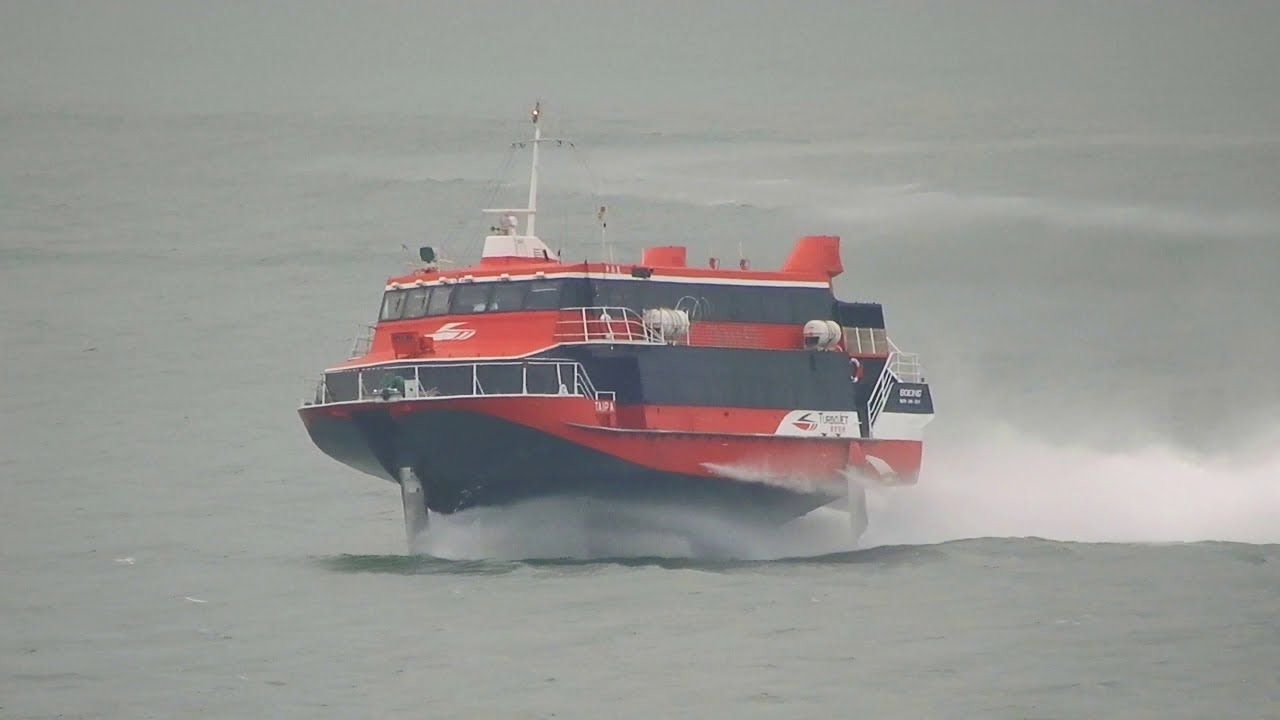
.Stanley Ho also had a fleet that did the Hong Kong to Macau run - same issue.

Joined: Oct 2018
Aviation Qualifications: PPL
Posts: 12,223
Likes: 1,649
From: Ferrara
The Dover- calais hovercraft was unbelievable - they had an inside, no windows section , and I think it had about 100% sea sickness rate. It was Ok if you were in a windowed section
Thread Starter
Joined: Jan 2000
Aviation Qualifications: SLF
Posts: 1,582
Likes: 312
From: UK and Italy
I took that hovercraft several times. As I remember it, the inside was full of cars, and the pax sat on the outside. You couldn't see much out of the windows because the spray covered them most of the journey, but I remember them as bucking like a bronco rather than slowly lurching. And they were noisy.
It might even be economical to bring them back, as although they drank fuel, the price of using the Channel Tunnel is now so exorbitant that they might be economically viable again. I'd rather see them come back that the subject of this thread replace the ferry.
It might even be economical to bring them back, as although they drank fuel, the price of using the Channel Tunnel is now so exorbitant that they might be economically viable again. I'd rather see them come back that the subject of this thread replace the ferry.
Joined: May 2024
Aviation Qualifications: Spotter
Posts: 971
Likes: 1,031
From: Near SOU
Having watched Airlander fly, she is an extremely graceful and stable craft.....apart from her slight altercation with the ground once.
Airship travel...like the flying boats...has an elegance about it. The biggest issue with them back in the early days was the use of hydrogen which didn't take a lot for it to go bang, such as the Hindenburg at Lakehurst.
It would be wonderful to see Cardington getting back into airship construction again with Airlander. But I suspect the only reincarnation to happen in the aviation world is the much heralded Airbus A380NEO, a far stronger probability than Airlander which will likely end up like the Spruce Goose, Princess and other great ideas that didn't happen.
Airship travel...like the flying boats...has an elegance about it. The biggest issue with them back in the early days was the use of hydrogen which didn't take a lot for it to go bang, such as the Hindenburg at Lakehurst.
It would be wonderful to see Cardington getting back into airship construction again with Airlander. But I suspect the only reincarnation to happen in the aviation world is the much heralded Airbus A380NEO, a far stronger probability than Airlander which will likely end up like the Spruce Goose, Princess and other great ideas that didn't happen.


Joined: Dec 2007
Aviation Qualifications: PPL
Posts: 2,010
Likes: 156
From: Westnoreastsouth
Having watched Airlander fly, she is an extremely graceful and stable craft.....apart from her slight altercation with the ground once.
Airship travel...like the flying boats...has an elegance about it. The biggest issue with them back in the early days was the use of hydrogen which didn't take a lot for it to go bang, such as the Hindenburg at Lakehurst.
.
Airship travel...like the flying boats...has an elegance about it. The biggest issue with them back in the early days was the use of hydrogen which didn't take a lot for it to go bang, such as the Hindenburg at Lakehurst.
.
When I worked 'somewhere in Surrey' for Wastospace I spent a fair amount of time over at Boscombe Down with Harriers various - quite often in the REG Facility (radio environment generator) - which meant towing the heap back to the hangar via the taxyway every night,one day we were trying to do just that but the Army were struggling to get their Airship back in the Hangar (Airship on trials work at that time) - lots of shouting going on
and they would not let us tow past the hangar - quite funny really but it meant I was late for the bar 
I also remember the day that the bang seat fired off out of the OEU Hangar roof into the Tanker Pool,we were not allowed to tow past that for some time either (understandably) but cannot remember if it was the same day as the Airship for a double delay or not !
Joined: Dec 2007
Aviation Qualifications: PPL
Posts: 2,010
Likes: 156
From: Westnoreastsouth
I took that hovercraft several times. As I remember it, the inside was full of cars, and the pax sat on the outside. You couldn't see much out of the windows because the spray covered them most of the journey, but I remember them as bucking like a bronco rather than slowly lurching. And they were noisy.
.
.
As you say - quite noisy and a fair bit of vibration !
Joined: Jan 2009
Aviation Qualifications: SLF
Posts: 291
Likes: 128
From: Oxon
I took the Hovercraft so many times, I loved it. I have family in Belgium, so I was a regular visitor there for many years, and if not on SABENA, then it would usually be the Hovercraft, an awesome craft.
I remember also taking something similar from HKG to Macau in the late 90's.
I remember also taking something similar from HKG to Macau in the late 90's.
Joined: May 2024
Aviation Qualifications: Spotter
Posts: 971
Likes: 1,031
From: Near SOU
If you like the big old hovers.....you can go play on one
https://hovercraft-museum.org/
"Princess Anne" is there to be climbed upon and explored...that is the SRN4, not the Princess Royal, obviously
https://hovercraft-museum.org/
"Princess Anne" is there to be climbed upon and explored...that is the SRN4, not the Princess Royal, obviously
Thread Starter
Joined: Jan 2000
Aviation Qualifications: SLF
Posts: 1,582
Likes: 312
From: UK and Italy
I remember listening to London VOLMET South (is that correct? I think it was, but I've had nearly 40 years to forget) on an airband radio in 1987, during the gales. Trains weren't running, motorways were off-limits to high-sided vehicles and there were trees down all over the place, but LHR and LGW remained open, as there wasn't much of a crosswind component. The same dispassionate voice read out 'windspeed one zero zero knots' as though this was an everyday occurrence.
>30 knots crosswind usually means most planes will divert. Now, for an airship with a Vne of 120 knots, what crosswind component will stop it landing? 12 knots? I can see a lot of flights being cancelled if the aim is to ferry people across the Irish Sea or across to the Scottish Islands. On both, it tends to get a bit windy at times.
Drifting off topic, I understand that in the 1987 gales, planes taking off lined up on the piano keys, applied thrust, and were airborne almost in the *length* of the piano keys, and similarly for landing. It must have been like landing a 747 in the same fashion as an Antonov An-2, which (like a hang-glider) can fly backwards if the wind exceeds the stall speed, which is 27 knots.
>30 knots crosswind usually means most planes will divert. Now, for an airship with a Vne of 120 knots, what crosswind component will stop it landing? 12 knots? I can see a lot of flights being cancelled if the aim is to ferry people across the Irish Sea or across to the Scottish Islands. On both, it tends to get a bit windy at times.
Drifting off topic, I understand that in the 1987 gales, planes taking off lined up on the piano keys, applied thrust, and were airborne almost in the *length* of the piano keys, and similarly for landing. It must have been like landing a 747 in the same fashion as an Antonov An-2, which (like a hang-glider) can fly backwards if the wind exceeds the stall speed, which is 27 knots.
Last edited by justapax; 25th February 2025 at 14:33.
Thought police antagonist

Joined: Jul 2003
Aviation Qualifications: LAME
Posts: 1,573
Likes: 349
From: Where I always have been...firmly in the real world
I remember listening to London VOLMET South (is that correct? I think it was, but I've had nearly 40 years to forget) on an airband radio in 1987, during the gales. Trains weren't running, motorways were off-limits to high-sided vehicles and there were trees down all over the place, but LHR and LGW remained open, as there wasn't much of a crosswind component. The same dispassionate voice read out 'windspeed one zero zero knots' as though this was an everyday occurrence.
>30 knots crosswind usually means most planes will divert. Now, for an airship with a Vne of 120 knots, what crosswind component will stop it landing? 12 knots? I can see a lot of flights being cancelled if the aim is to ferry people across the Irish Sea or across to the Scottish Islands. On both, it tends to get a bit windy at times.
Drifting off topic, I understand that in the 1987 gales, planes taking off lined up on the piano keys, applied thrust, and were airborne almost in the *length* of the piano keys, and similarly for landing. It must have been like landing a 747 in the same fashion as an Antonov An-2, which (like a hang-glider) can fly backwards if the wind exceeds the stall speed, which is 27 knots.
>30 knots crosswind usually means most planes will divert. Now, for an airship with a Vne of 120 knots, what crosswind component will stop it landing? 12 knots? I can see a lot of flights being cancelled if the aim is to ferry people across the Irish Sea or across to the Scottish Islands. On both, it tends to get a bit windy at times.
Drifting off topic, I understand that in the 1987 gales, planes taking off lined up on the piano keys, applied thrust, and were airborne almost in the *length* of the piano keys, and similarly for landing. It must have been like landing a 747 in the same fashion as an Antonov An-2, which (like a hang-glider) can fly backwards if the wind exceeds the stall speed, which is 27 knots.
Whilst I hope the project takes off (no pun intended) I would say it would be a non starter in Scotland. The excellent series "Island Crossings," gave a very good insight regarding Cal-Mac and how their operations and staff work...incidentally, I would suggest working for Cal-Mac is more of a vocation than occupation, they have some really committed people...

That, and by their nature, islands are a bit tight on space for ports so where this rather large bit of kit could land could be problematic.
Also, I would be interested, as an engineer, as to whom would be signing the C.R.S and how many rainforests a certain regulatory authority would deplete to cover the criteria.
The glossy PR blurb is only to be expected, but, i would suggest the UK market would be limited.
Son of Slot
Super Senior Moderator
Super Senior Moderator

Joined: Feb 2013
Posts: 2,051
Likes: 615
From: London
Some may be interested in this thread on another balloon style device. Please bear in mind that this is the main Rumours & News forum and you should read the entire thread before asking any questions!!!!
Thread Starter
Joined: Jan 2000
Aviation Qualifications: SLF
Posts: 1,582
Likes: 312
From: UK and Italy
Some may be interested in this thread on another balloon style device. Please bear in mind that this is the main Rumours & News forum and you should read the entire thread before asking any questions!!!!
There are several economically-viable sources of helium, one of which is lithium mining, which is very much du jour with the demand for EVs and the batteries to power them. In the long term, helium is a fossil fuel, it's the result of radioactive decay of fissile elements stored in rocks and sands, from when the earth was a lot more radioactive, and the generation of new helium by these same rocks and sand is now negligible.
Releasing helium is as irresponsible as burning fossil fuels. There's only so much left, and when it's gone, it will be regenerated for the remaining radioactive rocks at a very slow rate.
Every helium vessel outgasses, the molecule is so small it finds its way out of any containment vessel (look at how quickly helium balloons go limp). So when you extract helium, it's a short path to releasing it into space.
Nuclear fission will release plenty of Helium 4 by smashing tritium into deuterium. Unfortunately we haven't made it work yet on a large scale.
Justapax1
B Sc (Nuclear and Quantum Physics) M Sc (Microwaves and Modern Optics) D Sc (Radiation Physics)
Trust me, I'm a Physicist!
Joined: Jan 2008
Aviation Qualifications: SLF
Posts: 1,022
Likes: 1,066
From: Australia
Keeping it in this forum, there indeed no short-term shortage of helium, the price has come down a lot. Long-term, helium released into the atmosphere is lost, the earth's gravity is not strong enough to retain it, and it is lost to space.
There are several economically-viable sources of helium, one of which is lithium mining, which is very much du jour with the demand for EVs and the batteries to power them. In the long term, helium is a fossil fuel, it's the result of radioactive decay of fissile elements stored in rocks and sands, from when the earth was a lot more radioactive, and the generation of new helium by these same rocks and sand is now negligible.
Releasing helium is as irresponsible as burning fossil fuels. There's only so much left, and when it's gone, it will be regenerated for the remaining radioactive rocks at a very slow rate.
Every helium vessel outgasses, the molecule is so small it finds its way out of any containment vessel (look at how quickly helium balloons go limp). So when you extract helium, it's a short path to releasing it into space.
Nuclear fission will release plenty of Helium 4 by smashing tritium into deuterium. Unfortunately we haven't made it work yet on a large scale.
Justapax1
B Sc (Nuclear and Quantum Physics) M Sc (Microwaves and Modern Optics) D Sc (Radiation Physics)
Trust me, I'm a Physicist!
There are several economically-viable sources of helium, one of which is lithium mining, which is very much du jour with the demand for EVs and the batteries to power them. In the long term, helium is a fossil fuel, it's the result of radioactive decay of fissile elements stored in rocks and sands, from when the earth was a lot more radioactive, and the generation of new helium by these same rocks and sand is now negligible.
Releasing helium is as irresponsible as burning fossil fuels. There's only so much left, and when it's gone, it will be regenerated for the remaining radioactive rocks at a very slow rate.
Every helium vessel outgasses, the molecule is so small it finds its way out of any containment vessel (look at how quickly helium balloons go limp). So when you extract helium, it's a short path to releasing it into space.
Nuclear fission will release plenty of Helium 4 by smashing tritium into deuterium. Unfortunately we haven't made it work yet on a large scale.
Justapax1
B Sc (Nuclear and Quantum Physics) M Sc (Microwaves and Modern Optics) D Sc (Radiation Physics)
Trust me, I'm a Physicist!

Son of Slot
Super Senior Moderator
Super Senior Moderator
Joined: Feb 2013
Posts: 2,051
Likes: 615
From: London
Justapax1 Given that you have now revealed your true self - I shall probably have to ban you permanently from PPRuNe. After all, we can't have people in here spouting actual, real knowledge and like, you know, facts man. 
Thread Starter
Joined: Jan 2000
Aviation Qualifications: SLF
Posts: 1,582
Likes: 312
From: UK and Italy
 ?
?I am duly admonished.
Helium is constantly released into the atmosphere by natural processes. To put it in context, if you are reading this in a typical living room, most of the air is nitrogen, oxygen, and water vapour, but the argon would fill an inflatable armchair, the helium would fit in a shoebox, and the carbon dioxide in two shoeboxes. If you live in a city centre, there will also be NOx and SO2, in teaspoonful quantities.
Last edited by justapax; 26th February 2025 at 07:51.
