


Ftdk Jet


Sprucegoose
Joined: Sep 2000
Posts: 3,485
Likes: 1
From: Hughes Point, where life is great! Was also resident on page 13, but now I'm lost in Cyberspace....
If only I could afford one...
Last edited by Howard Hughes; 28th June 2008 at 00:14. Reason: Because I can't tell the difference between a Cirrus & Eclipse...


Joined: Aug 2003
Posts: 430
Likes: 1
From: Perth
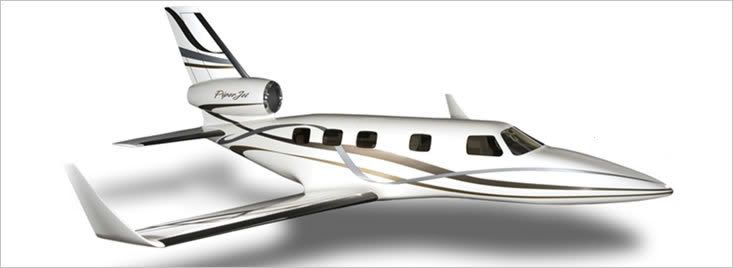
Geeez Jaba! I wouldn't fly something as ugly as that!

It would be interesting though to see what effect ground running would have on the tail feathers. prob OK until you're parked with a decent x-wind.




Joined: Aug 2003
Posts: 430
Likes: 1
From: Perth
Looks like a toad tadpole!
Where I DO have issues is with single engines on high performance jets.

They do still stop occasionally and while a V35 only has one, the difference is in the speed of the forced landing. probably twice what you can bring a V35 or C210 in at.
The difference in Kinetic energy is pretty fearsome.

Joined: Jul 2006
Aviation Qualifications: ATPL
Posts: 1,357
Likes: 125
From: Up yer nose, again.
They do still stop occasionally and while a V35 only has one, the difference is in the speed of the forced landing. probably twice what you can bring a V35 or C210 in at.
Here in the USA a single engine aircraft has to have a stalling speed of less than 61 kts. Therefore forced landing speed will not be any different for a single engine jet compared to other high performance singles, piston or turboprop.
Stalling speed can be higher than 61 kts but it requires greater crashworthiness in the cabin thus more weight.
FAR 23.49 is the reference if anyone wants it.
Why is it that people think that when you slap a jet engine on something it automatically loses it's gliding ability?
Last edited by Peter Fanelli; 28th June 2008 at 16:05.
Joined: Aug 2003
Posts: 430
Likes: 1
From: Perth
Why is it that people think that when you slap a jet engine on something it automatically loses it's gliding ability?
I guess it's just that the pursuit of speed imposes some compromises in the low end envelope, since few jet aircraft are marketed as STOL machines.
Also, the Jet machines are required to operate over a much wider flight envelope than the old bangers we've become accustomd to.
Looking at the wing section of the Cirrus jet for example, it just LOOKS like it wouldn't be happy below 80 or 90 knots and the paraphernalia that you can hang on a piston engine machine to allow it to fly slowly exacts a toll at higher speeds of th jet.
Consequently, when the fire goes out, the driver has got less choices insofar as where he/she is going to park the said machine.
On the other hand, I s'pose it's also true that if it goes quiet at FL370 you can probably glide to a serviceable strip, but then the management of the approach phase sans burner is probably going to be the tricky bit.
I'm sure that if you got one of thse new jets on an ILS glide slope it would pretty much stay on it with a bit of judicious airbrake, but a succssful forced landing on field or off may be another matter.
Joined: Jul 2006
Aviation Qualifications: ATPL
Posts: 1,357
Likes: 125
From: Up yer nose, again.
I recall way back, I think it was my first attempt at SCPL Flight Planning there were a couple of people in the class who were convinced that a jet powered aircraft would not glide and would in fact fall like a brick should the engines all fail.

Joined: Sep 2007
Posts: 82
Likes: 0
From: Capricorn
Does the country from which these students came still have mud huts or are they ex-Mirage jocks?
When the ATAR stopped the pilot threw a brick 'out the window' and flew formation on it to achieve the best glide angle. Ejection mandatory if not at high key (10,000ft AGL) within 1nm of THR though.
When the ATAR stopped the pilot threw a brick 'out the window' and flew formation on it to achieve the best glide angle. Ejection mandatory if not at high key (10,000ft AGL) within 1nm of THR though.