


quantum gravity gradiometer

Thread Starter
Ecce Homo! Loquitur...

Joined: Jul 2000
Aviation Qualifications: Spotter
Posts: 24,695
Likes: 7,377
From: Peripatetic
https://arxiv.org/pdf/2108.05519.pdf
Can Traditional Terrestrial Applications of Gravity Gradiometry Rely Upon Quantum Technologies? A Side View
….Since the article was published in Nature Review (Physics) in 2019, there have been no reports on any advances in using matter-wave based gravity gra- diometers for traditional commercial and defence related applications. There also have been some misleading considerations made recently in regard of using quantum gravity gradiometers. In a recently published report titled “Quantum Technology and Submarine Near- Invulnerability” the author considers using them for detecting submarines. The author is right saying that the mass of a submarine, as any other mass, creates a gravitational signature which, in theory, can be measured by a very sensitive quantum gravity gradiometer without ex- plaining what the very sensitivity should be provided. However, no matter what the mass distribution is in the submarine’s hull, the averaged density of floating subs is equal to the density of sea water due to the elementary buoyancy effect. This means there will not be any detectable gravitational anomaly seen at distances more than a few submarine’s lengths as the latter can only be created by density contrast. The report is an important discussion about oceans’ transparency and the author’s final conclusion that quantum gravity gradiometers will not make oceans fully transparent or seriously endanger submarine near-invulnerability is correct….
Can Traditional Terrestrial Applications of Gravity Gradiometry Rely Upon Quantum Technologies? A Side View
….Since the article was published in Nature Review (Physics) in 2019, there have been no reports on any advances in using matter-wave based gravity gra- diometers for traditional commercial and defence related applications. There also have been some misleading considerations made recently in regard of using quantum gravity gradiometers. In a recently published report titled “Quantum Technology and Submarine Near- Invulnerability” the author considers using them for detecting submarines. The author is right saying that the mass of a submarine, as any other mass, creates a gravitational signature which, in theory, can be measured by a very sensitive quantum gravity gradiometer without ex- plaining what the very sensitivity should be provided. However, no matter what the mass distribution is in the submarine’s hull, the averaged density of floating subs is equal to the density of sea water due to the elementary buoyancy effect. This means there will not be any detectable gravitational anomaly seen at distances more than a few submarine’s lengths as the latter can only be created by density contrast. The report is an important discussion about oceans’ transparency and the author’s final conclusion that quantum gravity gradiometers will not make oceans fully transparent or seriously endanger submarine near-invulnerability is correct….


Joined: Oct 2018
Aviation Qualifications: PPL
Posts: 12,254
Likes: 1,663
From: Ferrara
They don't come cheap - a sonobuoy or a geophone on the ocean bottom is a few dollars - a gravimeter.. a lot - and you still have the range issue.
And thanks ORAC for digging up that paper.
I42 and I can go back to the day job.................
And thanks ORAC for digging up that paper.
I42 and I can go back to the day job.................


Joined: Oct 2018
Aviation Qualifications: PPL
Posts: 12,254
Likes: 1,663
From: Ferrara
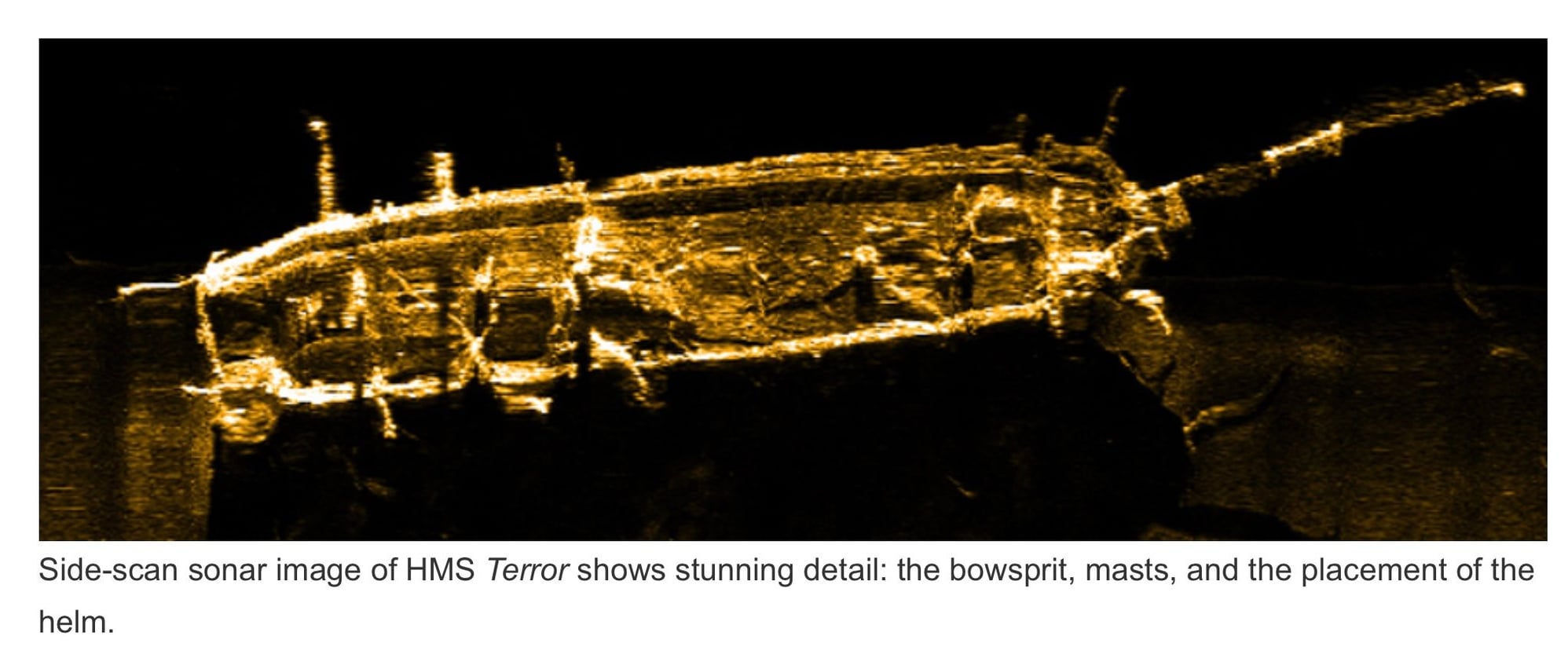
"Would it be any use in locating shipwrecks etc ?"
worse I'd have thought as more of the vessel will be full of sea water - the problem is the sampling and the noise from any moving platform. A gravimeter, even a "simple" one is a remarkable instrument. They are pretty rugged, quite small , and can show a gravity difference between the ground and a table top. But that's a fixed location.
worse I'd have thought as more of the vessel will be full of sea water - the problem is the sampling and the noise from any moving platform. A gravimeter, even a "simple" one is a remarkable instrument. They are pretty rugged, quite small , and can show a gravity difference between the ground and a table top. But that's a fixed location.
