


RAF aircraft used Smiths Attitude/Heading Reference system?

Thread Starter

Joined: Jan 2005
Posts: 68
Likes: 4
From: Munich/Gemany
OK, so in the VC10 the system controlled compass AND attitude indicator? The photograph in #10 on top is
acutally from the Hawk's flight manual. Good to know, that there are more birds out there using the same
sestem as it increases the chance that there survived some information and/or material!
From when do you remember this panel?
acutally from the Hawk's flight manual. Good to know, that there are more birds out there using the same
sestem as it increases the chance that there survived some information and/or material!
From when do you remember this panel?

Thread Starter
Joined: Jan 2005
Posts: 68
Likes: 4
From: Munich/Gemany
Just checked the WEB but have not been able to spot the panel in any of the pictures
there (not cockpit and not tech station): a b
http://www.!!!!!!!!!!!!!!/photo/UK-Air-Force/Vickers-VC10-C1K/1030575 http://www.!!!!!!!!!!!!!!/photo/UK-Air-Force/Vickers-VC10-K3/2325500What was the type of VC-10 you remember the panel from?
there (not cockpit and not tech station): a b

Joined: May 1999
Aviation Qualifications: ATP+Mil
Posts: 27,394
Likes: 856
From: Quite near 'An aerodrome somewhere in England'
The compass controllers were fitted at the navigator's position - your photos show the pilots' position.
Attitude was not derived from the same system.
The VC10K had a completely different compass system.
Attitude was not derived from the same system.
The VC10K had a completely different compass system.

Thread Starter
Joined: Jan 2005
Posts: 68
Likes: 4
From: Munich/Gemany
Thanks BEagle for the information. Here WEB page dedicated to the VC-10, but
unfortunately the cockpit photos there (nav/tech) do not show the panel - so probably
it is the wrong type. There is a flight manual out there showing the panel, but it
is different from panel shown in posting 10 (top) - and it is named "compass". So
you are right, that it controlled just the compass and was a heading reference only
in the VC-10.
Thanks for responding...
unfortunately the cockpit photos there (nav/tech) do not show the panel - so probably
it is the wrong type. There is a flight manual out there showing the panel, but it
is different from panel shown in posting 10 (top) - and it is named "compass". So
you are right, that it controlled just the compass and was a heading reference only
in the VC-10.
Thanks for responding...
Cunning Artificer
Joined: Jun 2001
Posts: 3,125
Likes: 7
From: The spiritual home of DeHavilland
Memory of the seventies is a bit faded, but I have definitely worked with that panel somewhere before. Belfast? B707?
Can't be sure which aircraft but it certainly wasn't a Hawk.
Can't be sure which aircraft but it certainly wasn't a Hawk.
Thread Starter
Joined: Jan 2005
Posts: 68
Likes: 4
From: Munich/Gemany
Meanwhile I obtained a picture of the panel from the VC-10 (Thanks a lot to Terry!) - it looks
quite different from the Hawk's panel and is marked as "COMP":

Of course some of the controls are similar, but there is a different system behind
the scenes I think...
quite different from the Hawk's panel and is marked as "COMP":
Of course some of the controls are similar, but there is a different system behind
the scenes I think...
Thread Starter
Joined: Jan 2005
Posts: 68
Likes: 4
From: Munich/Gemany
As there was some time during the lock-down I had a look at an attitude indicator NDN6714-03, ref. no. 6370014, made by Louis Newmark, to see whether it might fit the test set....
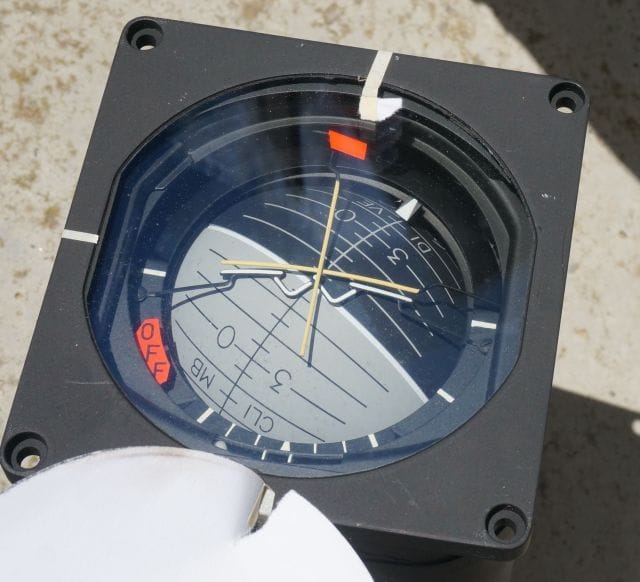
...but after some measurements I am sure, that this indicator is remotely driven by gyro signals, but it does not match the test set as it seems to be more modern - plugs do not match and are next generation MIL plugs compared to the ones on the test set. So unfortunately the search will go on and the indicator in the Hawk even looks different:
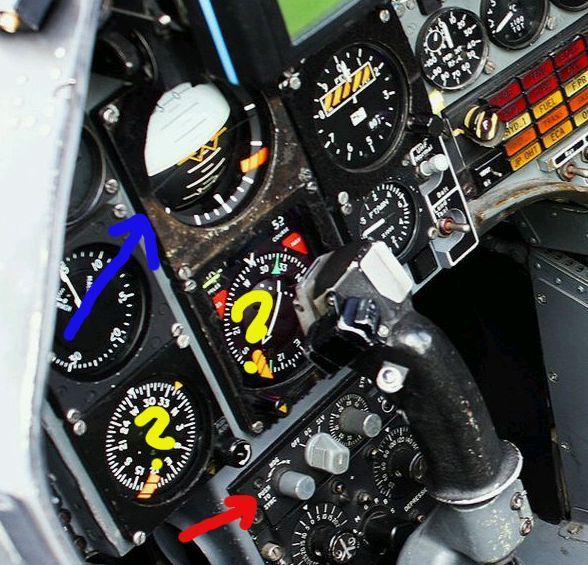
So the following questions to the Hawk experts: In the lower middle we see the control panel of the compass reference system (red arrow). We also see the attitude indicator (blue arrow) looking different than the one I investigated. Which instruments (yellow questionmarks) are also controlled by the AHRS, probably direction indicator left one, but also the HSI?
...but after some measurements I am sure, that this indicator is remotely driven by gyro signals, but it does not match the test set as it seems to be more modern - plugs do not match and are next generation MIL plugs compared to the ones on the test set. So unfortunately the search will go on and the indicator in the Hawk even looks different:
So the following questions to the Hawk experts: In the lower middle we see the control panel of the compass reference system (red arrow). We also see the attitude indicator (blue arrow) looking different than the one I investigated. Which instruments (yellow questionmarks) are also controlled by the AHRS, probably direction indicator left one, but also the HSI?
Last edited by baigar; 24th April 2020 at 10:47. Reason: Added photo
Thread Starter
Joined: Jan 2005
Posts: 68
Likes: 4
From: Munich/Gemany
For those interested, I just want to post an update: Since 2020 I was able to confirm, that the test set I initially got is intended for thesting the BAe Hawk's attitude and headinr reference system (AHRS), namely the AHRS-6000:

I was even able to obtain the matching displayemen gyrsocope (plenty are available for a low price). These are really masterpieces of mechanical engineering with two independent gyros on a platform - one used for pitch/roll leveling and the other one for heading. Much harder to get hands on was the control box called "Electronic Control Amplifier", but finally I got one (shown with the test set's cables attached already):

And after some investigation and creating cables I was finally able firing up the system and thanks to the test-set I am having quite full control on the servo loops, handling of earth rate and I can peek into the system while running:
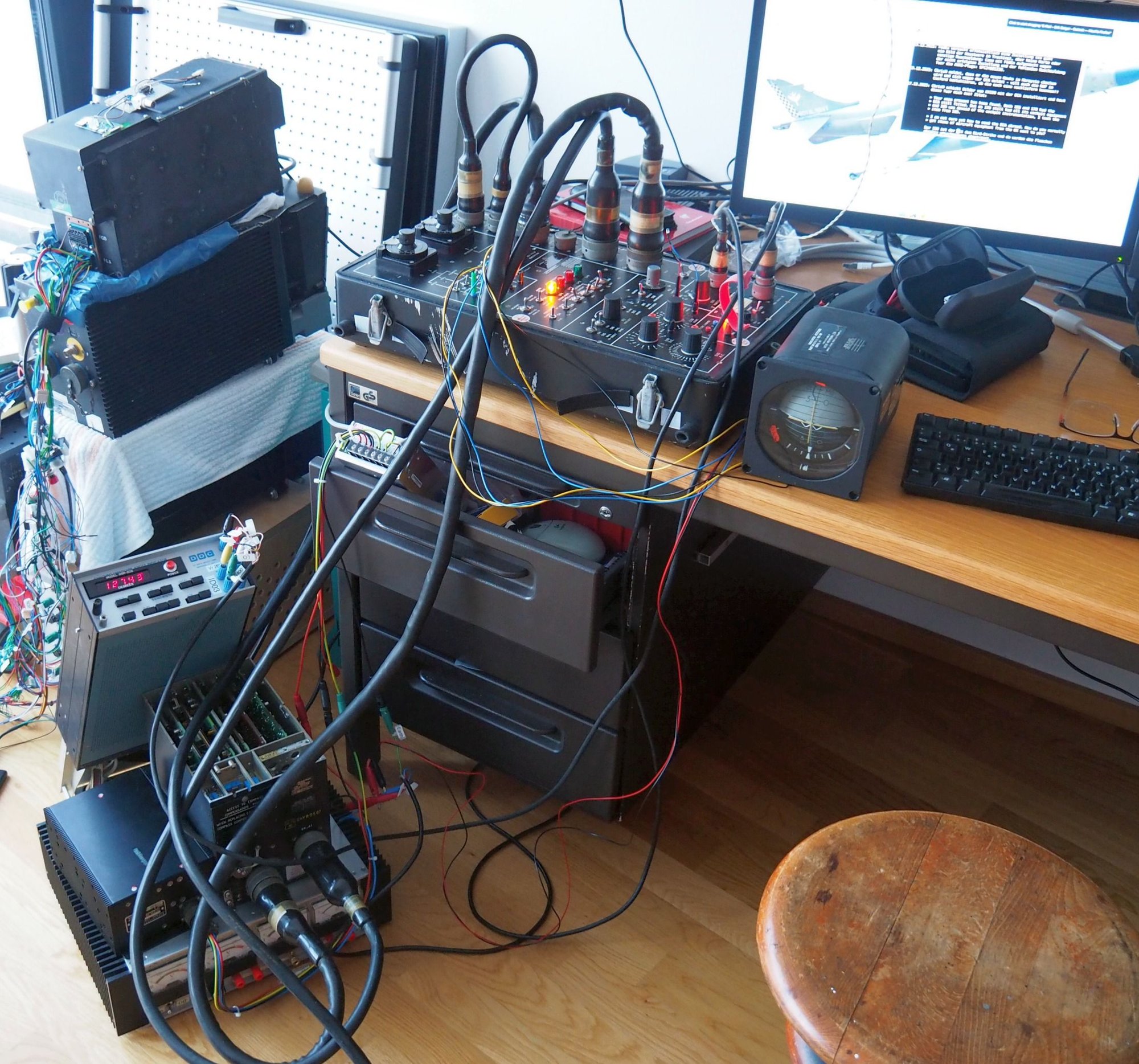
Also visible in this picture is the attitude indicator which is driven by the system and which was discussed in some posts before. So if there are questions, just reach out and a second of the ECA boxes as a backup would be highly welcome...
I was even able to obtain the matching displayemen gyrsocope (plenty are available for a low price). These are really masterpieces of mechanical engineering with two independent gyros on a platform - one used for pitch/roll leveling and the other one for heading. Much harder to get hands on was the control box called "Electronic Control Amplifier", but finally I got one (shown with the test set's cables attached already):
And after some investigation and creating cables I was finally able firing up the system and thanks to the test-set I am having quite full control on the servo loops, handling of earth rate and I can peek into the system while running:
Also visible in this picture is the attitude indicator which is driven by the system and which was discussed in some posts before. So if there are questions, just reach out and a second of the ECA boxes as a backup would be highly welcome...
Thread Starter
Joined: Jan 2005
Posts: 68
Likes: 4
From: Munich/Gemany
...here a picture of the gyroscope (with cable from the test set attached) to complete the story after 20+ years and I am planning to take a video of the system in action with an opened gyro in the next weeks, so stay tuned:
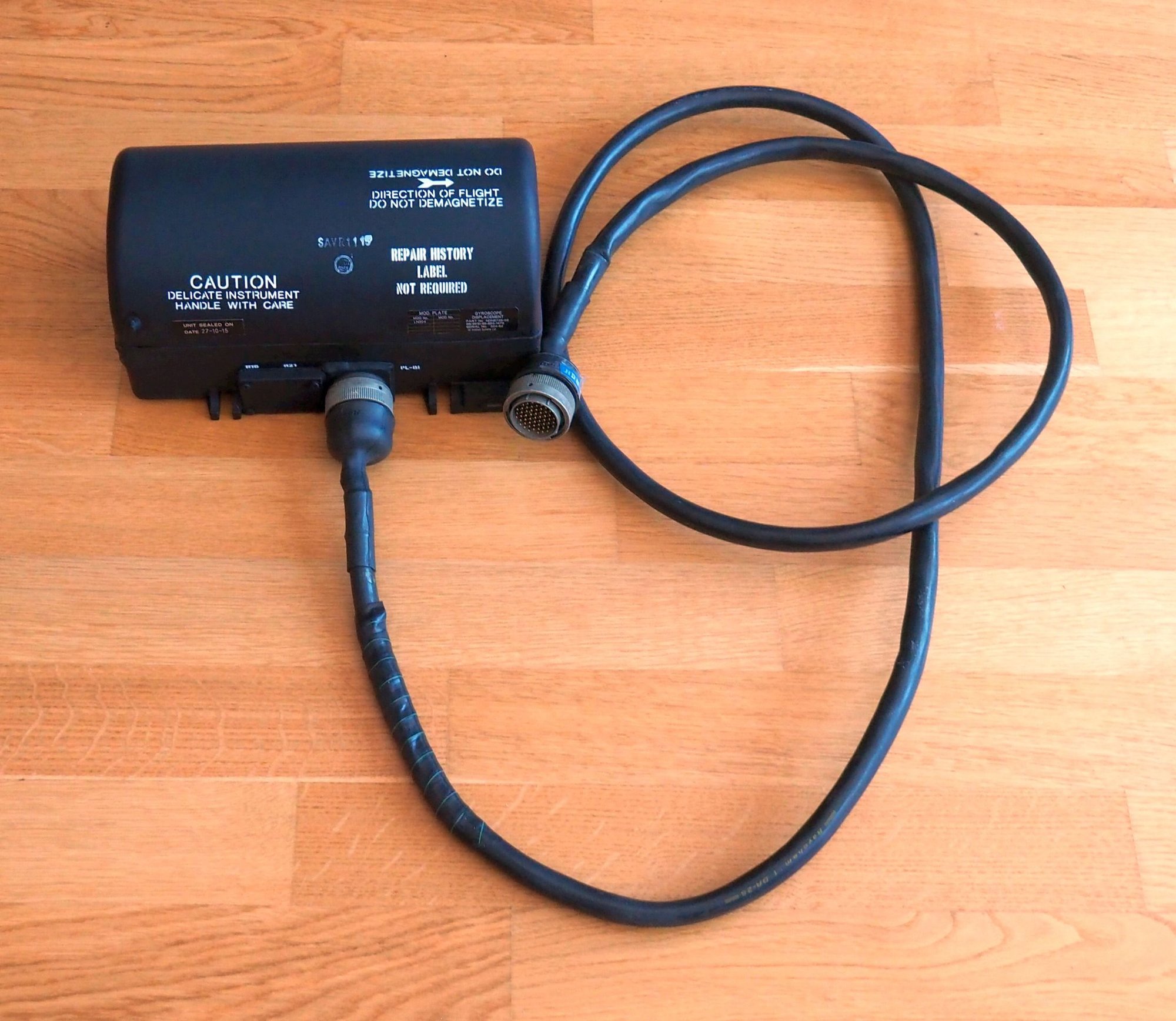
By the way: Some of these systems for sure are still in use in the fleet of the Hawk trainers and I guess with the Red Arrows
By the way: Some of these systems for sure are still in use in the fleet of the Hawk trainers and I guess with the Red Arrows
Thread Starter
Joined: Jan 2005
Posts: 68
Likes: 4
From: Munich/Gemany
Finally after many years I got all parts together, created the required cabling and was able to fire up a complete AHRS-6000 from the great BAe Hawk T.1 aircraft. Beginning of 2026 I recorded some material and the video now is onlline. So if you want to dive into the fully aerobatic AHRS-6000 have a look at my video:


