


An-2 RA33623 hits lamp post in emergency landing attempt near Essentuki, Russia

Thread Starter

Joined: Jun 2008
Posts: 26
Likes: 4
From: Belgium
An-2 RA33623 hits lamp post in emergency landing attempt near Essentuki, Russia
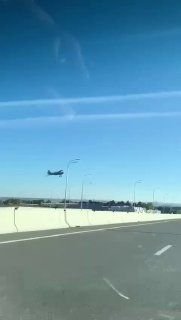
On 27-Oct-2024, an An-2 with parachutists on board suffered an engine malfunction shortly after take off from Essentuki, near Stavropol. It was unable to reach the airfield and force-landed in a forest nearby. All occupants survived.
Footage of an An-2 force-landing in a forest belt in Stavropol Krai
Play video
This moment was filmed by nearby eyewitnesses when the An-2 (RA-33623) plane, after taking off from the Yessentuki DOSAAF site, had to make an emergency landing in a forest belt two kilometers from Yessentuki due to an engine malfunction.
According to the latest information, in addition to the pilot, there were nine parachutists on board. As a result of the rough landing, the aircraft commander and two passengers were injured. They were injured and taken to the hospital. In addition to the fact that the crop duster received significant damage, road equipment was also damaged - the An-2 knocked down a lamp post of a road bridge with its left wing.
Source: Telegram
Footage of an An-2 force-landing in a forest belt in Stavropol Krai
Play video
This moment was filmed by nearby eyewitnesses when the An-2 (RA-33623) plane, after taking off from the Yessentuki DOSAAF site, had to make an emergency landing in a forest belt two kilometers from Yessentuki due to an engine malfunction.
According to the latest information, in addition to the pilot, there were nine parachutists on board. As a result of the rough landing, the aircraft commander and two passengers were injured. They were injured and taken to the hospital. In addition to the fact that the crop duster received significant damage, road equipment was also damaged - the An-2 knocked down a lamp post of a road bridge with its left wing.
Source: Telegram
Last edited by Frits van Hout; 30th October 2024 at 00:06. Reason: Added date

Pegase Driver

Joined: May 1997
Aviation Qualifications: ATCO
Posts: 4,446
Likes: 1,151
From: Europe
He also went straight ahead after the engine failed , also helped.
Joined: Feb 2007
Posts: 268
Likes: 23
From: Auckland, New Zealand
There is even a monoplane version which they created by, well, removing the bottom set of wings. Actually I'm not sure if it is really the same upper wing but it certainly looks like it in photos.
Fleet Manager


Joined: Aug 2006
Aviation Qualifications: CPL
Posts: 7,081
Likes: 2,938
From: Ontario, Canada
One wing out of 4
Pegase Driver
Joined: May 1997
Aviation Qualifications: ATCO
Posts: 4,446
Likes: 1,151
From: Europe
more worried about adverse yaw from that drag out at the wing tip.

Joined: Aug 2001
Aviation Qualifications: Spotter
Posts: 1,829
Likes: 165
From: se england
How lucky were they to just make it over the highway overbridge . Mind you AN2s are very special aircraft, when visiting my son in Czech republic I often go and watch the goings on at his local airstrip. Usually the AN 2 is doing its paradropping and can clearly be seen going backwards on a windy day at afew thousand feet . Also no two landings seem the same , sometimes rolling out some way as they are big and heavy and sometimes seeming to stop almost as they touch down.
One of those cases where speed isn't an advantage for some tasks. reading a book about the U Boat war in WW2 one has to think of the Swordfish - a suicide job attacking conventional warships but its slowness and therefore ultra short take off and landing on small escort carriers its big engine bi plane layout made it literally perfect for convoy escort duties as no helis back then and anything modern (for the time) would have struggled with the escort carriers dimensions.
And the AN2 and Swordfish reallyare quite alike
One of those cases where speed isn't an advantage for some tasks. reading a book about the U Boat war in WW2 one has to think of the Swordfish - a suicide job attacking conventional warships but its slowness and therefore ultra short take off and landing on small escort carriers its big engine bi plane layout made it literally perfect for convoy escort duties as no helis back then and anything modern (for the time) would have struggled with the escort carriers dimensions.
And the AN2 and Swordfish reallyare quite alike
Joined: Feb 2006
Aviation Qualifications: LAME
Posts: 1,129
Likes: 168
From: Station 42
I spent some time maintaining these simple and sturdy aircraft in Africa and quite enjoyed the experience. A great bush operations aeroplane (as long as weight and balance loading limits were obeyed). Regarding forced landings, this Wiki excerpt addresses the issue: https://en.wikipedia.org/wiki/Antonov_An-2
"If the engine quits in instrument conditions or at night, the pilot should pull the control column full aft and keep the wings level. The leading-edge slats will snap out at about 64 km/h (40 mph) and when the airplane slows to a forward speed of about 40 km/h (25 mph), the airplane will sink at about a parachute descent rate until the aircraft hits the ground."
"If the engine quits in instrument conditions or at night, the pilot should pull the control column full aft and keep the wings level. The leading-edge slats will snap out at about 64 km/h (40 mph) and when the airplane slows to a forward speed of about 40 km/h (25 mph), the airplane will sink at about a parachute descent rate until the aircraft hits the ground."
 really???
Pegase Driver
Joined: May 1997
Aviation Qualifications: ATCO
Posts: 4,446
Likes: 1,151
From: Europe
But the SOCATA Morane Rallye , also equipped with auto aerodynamic extension slats does roughly the same only much faster ( 90 Km/h ) against the An2 (50 Km/h) .but the rate of descent for both in this mode is roughly the same at around 1000-1200 ft/min ..not a smooth touch down , but you'll survive..


Joined: Dec 2019
Posts: 786
Likes: 173
From: OnScreen
Fleet Manager
Joined: Aug 2006
Aviation Qualifications: CPL
Posts: 7,081
Likes: 2,938
From: Ontario, Canada
around 1000-1200 ft/min ..not a smooth touch down , but you'll survive..
Not surprising to me, roadside lampposts are designed to break
Gnome de PPRuNe

Joined: Jan 2002
Aviation Qualifications: Spotter
Posts: 15,184
Likes: 1,199
From: Too close to Croydon for comfort
James Black and Mike Riley demonstrated the AN-2's parachute descent capabilities at Biggin Hill once as I recall - without the hitting the ground bit of course...
Joined: Dec 2019
Posts: 786
Likes: 173
From: OnScreen
Not to say, I don't have the impression to be blown off my motobike (chopper type) when driving 50 km/h. Speeding up to 80-100 km/h makes a great difference and with 160 km/h it's a challenge to not be left behind by the motobike (the drag-force is the square of the speed).

