Sorry, all, I misplaced two of the vectors in my explanation. So I'll stick with my story, and only place I find a no-kidding AoA and pitch attitude and both velocity vectors was the one I quoted from the BEA report.
This is what I was trying to depict.
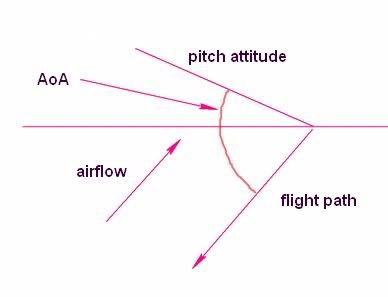
As shown here on my chalkboard, the AoA is the sum of the pitch attitude and the velocity vector ( assume airflow is opposite the velocity vector in the air).
Bear is correct about total velocity, 'cause if both horizontal and vertical velocities were identical, the total vector would be about 1.414 times either of them ( square root of two).
Need a real geometry wizard to make the call. Winner ( and referee) gets a free slug of Jeremiah Weed at my fishing cabin in Colorado in a few weeks.
I throw my hat in with the AoA mafia.
I don't understand why it isn't used more often, as it reflects the basic characteristics of the wing and its lift capability. In other words, weight of the jet is inherent, as the AoA must be greater to get the extra lift for the same speed. High lift devices, flaps, etc can change the stall AoA value, but that's an easy thing to depict on a display.
I call 'bird to the stand re: AoA indexer and gauges for the Navy jets.
Hate to hijack the thread from the "who was in what seat" discussion, but thot we could use a break.