Chris, HN39;
Originally Posted by Chris Scott 6th Apr 2011 04:52
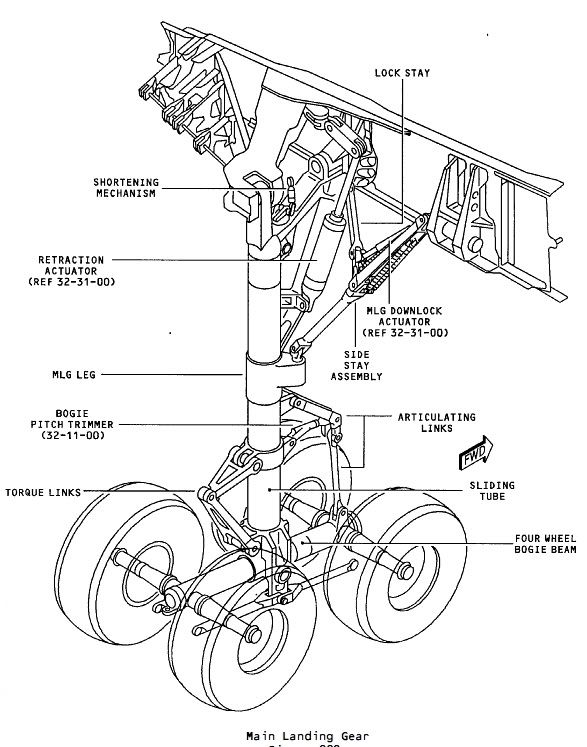
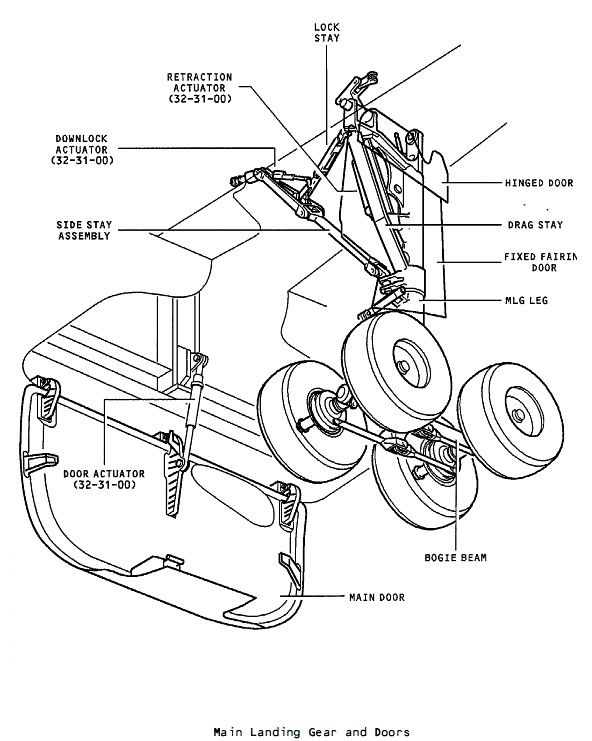
If the MLG was in the retracted position on impact, the disturbance to the MLG up-lock and the ripping-off of the lightweight main doors could allow the leg to drop suddenly or gradually into the position shown; perhaps like a gravity-extension procedure.
I think both
HN39 and you are reading the photograph of the right gear/wing/flap track correctly. That is indeed a flap track on the right side of the photograph, (confirmed). The diagrams below may help sort out the original question,
Chris.
I am aware that another poster had considered the vertical water impact on the gear doors may have molded them to the high points of the retracted gear and, given the surface area of the MLG itself, (let alone the doors), presented to the water, that the gear would not have been forced to the down-position. I think that is a reasonable expectation, for the moment of impact.
One thing is for sure in this theory regarding why the gear is resting in the extended position: Against impact forces alone, the uplocks would not have held the MLG up, nor would have the MLG doors. They would have broken at impact.
It remains to be understood whether the impact with the surface of the water would have kept the gear up, at least until the wreckage began settling or whether the gear broke through such forces and extended at the moment of impact. I don't think it matters.
Alternatively, the crew threw the gear out as a last-minute attempt to regain control and the recorders will tell us that.
What is interesting is, it's extended and there are two reasonable notions why - impact forces or crew action. We will learn soon enough I think.
PJ2