CAUTION - DIAGRAM ALERT!
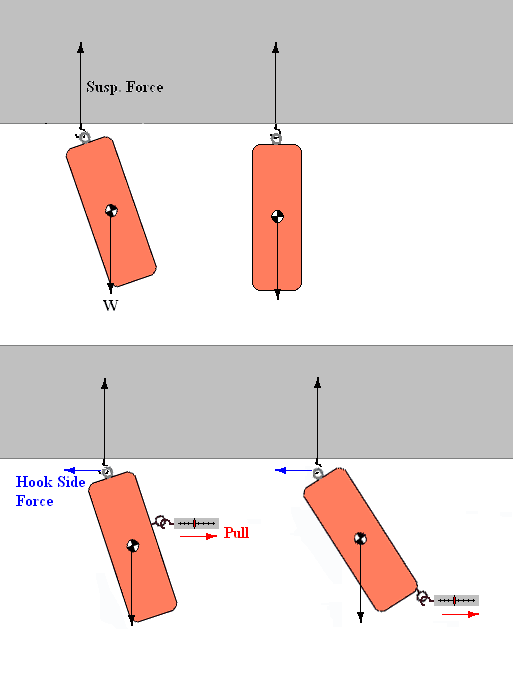
I talked about this situation in one of my previous posts, so at the risk of being called a gratuitous diagrammist, here's one.
In the top row, if the bag was hanging out to one side and let go, it would swing and come to rest with the CofG aligned with the suspension hook - no surprises there.
In the lower row, left side, a calibrated pull is applied to the bag halfway up.
The bag moves out, and when it gets to as far as it's going to go, two opposing couples are holding it still:
1. The side forces from the suspension hook and the spring balance, trying to move it out, and
2. The vertical forces, up from the hook and weight down from the CofG.
The relative power of these couples comes from two things - the size of the forces, and the arm between them.
Now to the right hand picture - same everything, except the spring balance is now attached to the bottom of the bag. Because the arm is now bigger, the pro-swing couple is greater and so it has to swing further right before the opposing couple (weight and suspension force) is big enough to balance it. Obviously the further it goes, the more of an arm there is for weight to act as a restoring force.
So my point is that this is just like the hovering helicopter, and the distance between the suspension point and where the lower side force is applied DOES matter in how far the thing will roll (or in this case, swing out).
Right, no more diagrams from me now, I promise.