By way of example, the vast, vast majority approaches used by modern jet airlines use approach modes which guide and correct the aircraft’s position laterally, vertically and with auto thrust to control the speed. The pilot just has to monitor and disconnect at the appropriate time with the aircraft usually on a stable trajectory towards the touchdown zone.
Depending on where you fly to you might have a few more offset approaches or circling manoeuvres but for most major operators in Europe at least, this would be the exception rather than the norm.
Back when you were flying more basic types with lower levels of automation you used to have to monitor and make adjustments to the speed and trajectory either through changing targets for the autopilot or by manually manipulating the controls whilst also monitoring and reading and interpreting the data being provided by the ground based navigation aid (VOR, DME, NDB). On top of this, every time you altered the aircraft’s configuration or the wind changed you would have to take this into account (reducing ground speed requires a reducing rate of descent for a constant angle) usually with a change of thrust required. The automation on modern types takes this workload away and all we have to do is monitor the automatics making the corrections and flying the profile. With modern RNAV approaches there is no ground based aid to compare the trajectory against so the monitoring demands are also reduced. There is still plenty to pay attention to but the workload is less than half of what it used to be.
A skill which is not practiced is a skill which is wasting. There are certain failures and combination of failures which will render the automation inoperable. When these exceedingly rare failures occur we still have to perform to the same level as when we were flying approaches described above weekly. It is not impossible but it would certainly be a stretch for lots of today’s pilots (especially those who have only flown modern, highly automated types) to guide the aircraft smoothly along an older style non-precision approach as described above. This is why we occasionally get to fly these sorts of profiles in the simulator.
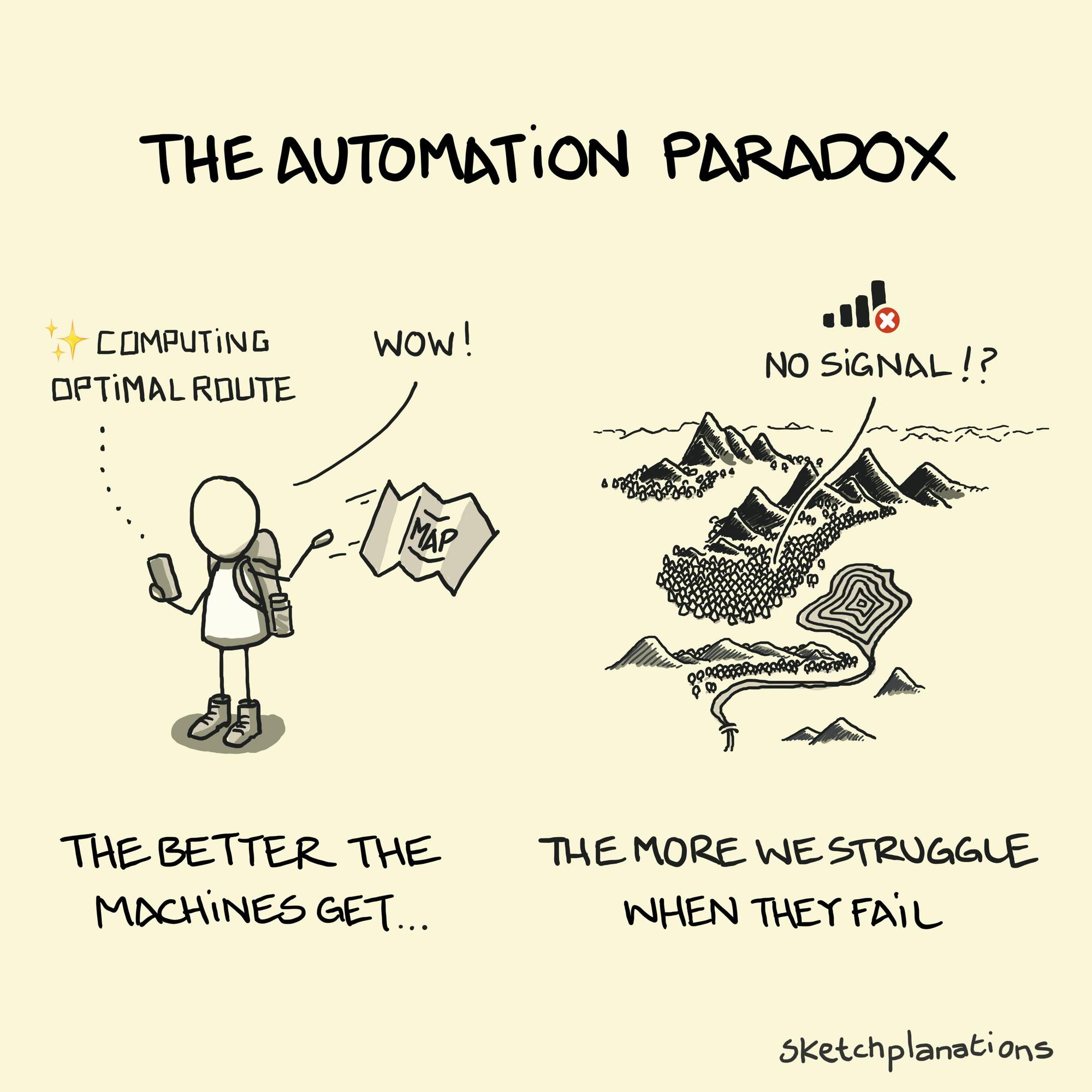
If you go back further, to early generation jet and even earlier piston engined airliners the workload involved with keeping those powerplants within operating parameters was considerable. As someone who has never flown an non-fadec airliner, I can only imagine how busy those flight decks were - it was a whole other level of complication. The evidence is pretty clear though - as automation has improved the hull loss rates have also improved. What we cannot afford to do as pilots is to be over reliant on automation or monitor it insufficiently - there are plenty of accidents where this has been a factor (Asiana San Francisco, Turkish Schipol, Emirates Dubai, Air France South Atlantic). We need to understand what it is and is not doing at any particular moment.