Originally Posted by
develop331
I was reading through CAP493 (MATS Part 1) this evening, as you do, and I came upon this curious paragraph:
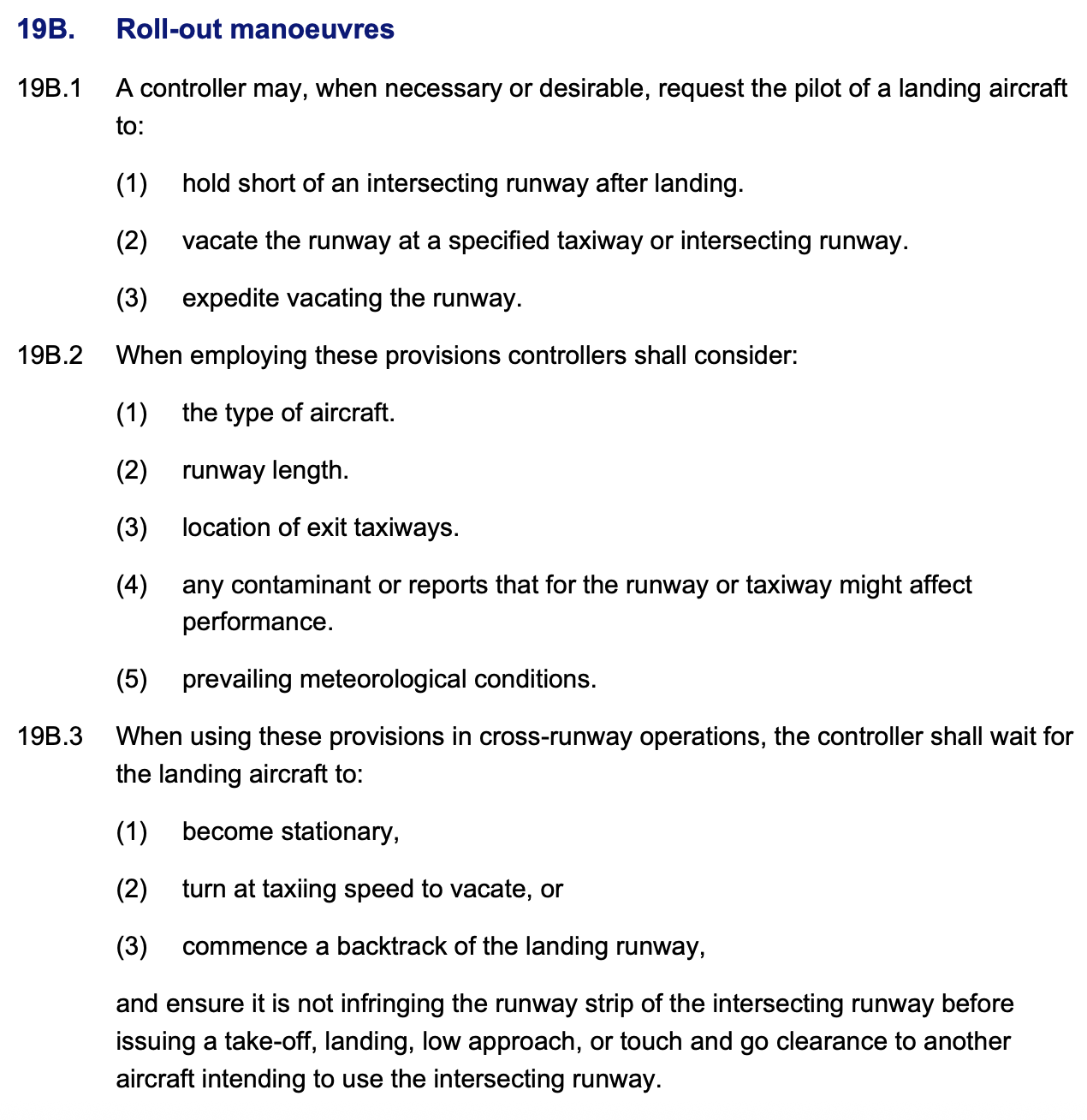
Does this mean that it is possible to get an American-style "cleared to land, hold short runway...." in the UK?? Not too sure where it would be used, or why (given 19B.3). Does anyone have any information on this?
I agree that 19B.3 would seem to preclude its use like it's used in the USA. I'm struggling to imagine a scenario in which it would be used here. Assume an airport with two crossing runways (a simple cross shape for example, rwy 18/36 and 27/09). One a/c cleared to land on 18, instructed "LAHS runway 27" or whatever. Another a/c lined up on 27 awaiting departure. 19B.3 means departure can't roll until the first one has landed and is not going to infringe 27. Under current procedures this is exactly the same. If the arrival naturally stopped / vacated short of 27 you'd launch the departure at that point. If it rolled through, you would issue instructions to stop it backtracking through the intersection if you wanted to roll the departure. Either way, allowing for some sort of braking failure or even a long float / deep landing as it does, it doesn't allow for any more flexibility than we already have.
The only scenario I can think of (in my example) is when you want the arrival to vacate onto rwy 27, eg for taxi to parking, but it's obstructed with the departure who's lined up. That seems like a very niche and rare reason to introduce a heavily-restricted version of a procedure we've never used before? Other than some sort of plan for alignment with international procedures perhaps.
Would love to hear any actual, likely benefits from more experienced ATCOs (or pilots) who can spot what I've missed!