Certainly: You
cannot stop [on the runway]! You're going onward - make the best of it. In the case of a power loss, eventually, a stop is inevitable, the point of the emergency brief is to make that stop planned, and the most safe possible for the circumstances.
That's my whole point, the emergency brief is situational. It requires describing (succinctly) the best plan for what is an imagined emergency event, based upon that set of circumstances. I was riding jumpseat yesterday in the DC-3 for a test flight, and considering the emergency brief conducted by the captain - it was totally appropriate to what we were doing. An important element, which I appreciate with any two crew operation was: "Are there any questions?" and he paused, so the co-pilot had the opportunity to consider, and reply "no", and the power levers were smoothly advanced.
I was training the owner/PPL from this runway:
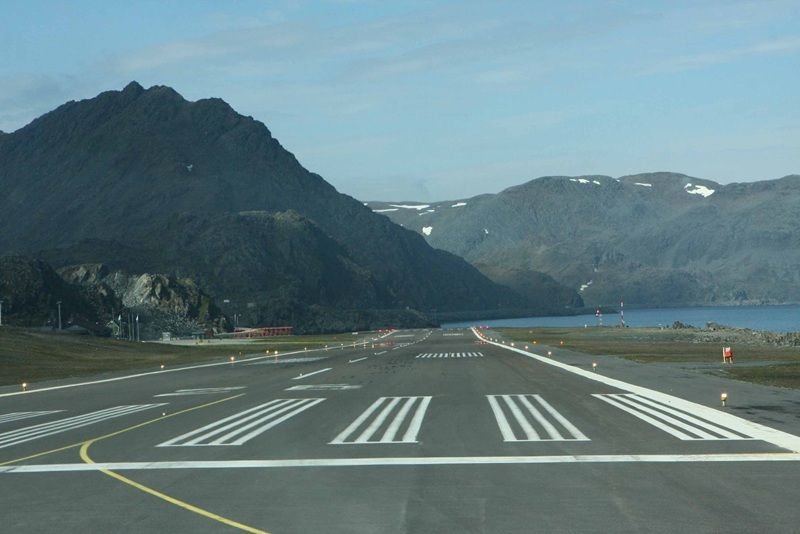
I gave the emergency brief; It was: "Retract the gear once airborne, begin a turn to the right, in the case of engine failure, land on the water.". I did not say "ditch", because we were flying an amphibian. I intended a briefing appropriate to the circumstances. He was already on the edge of task saturation (with just avoiding the rocks), so I did not brief the things I might do as PNF to restore engine power, if that would work. In the mean time, I expected a decent water landing if power could not be restored. We did a number of circuits there, and it was a rewarding experience in something different!