I have no doubt that he was unaware of the fire - my point was that he may well have followed his training and delayed shutting down a failed engine until he had time to refer to the check list.
In this case that could well turn out to have been a mistake but that is with 20/20 hindsight.
Company policy overrides the RFM procedure? Unless there is an approved supplement?
Below would be following the RFM.
Note the reference to memory items and the requirement to "perform immediately" with the grey background when it arises.
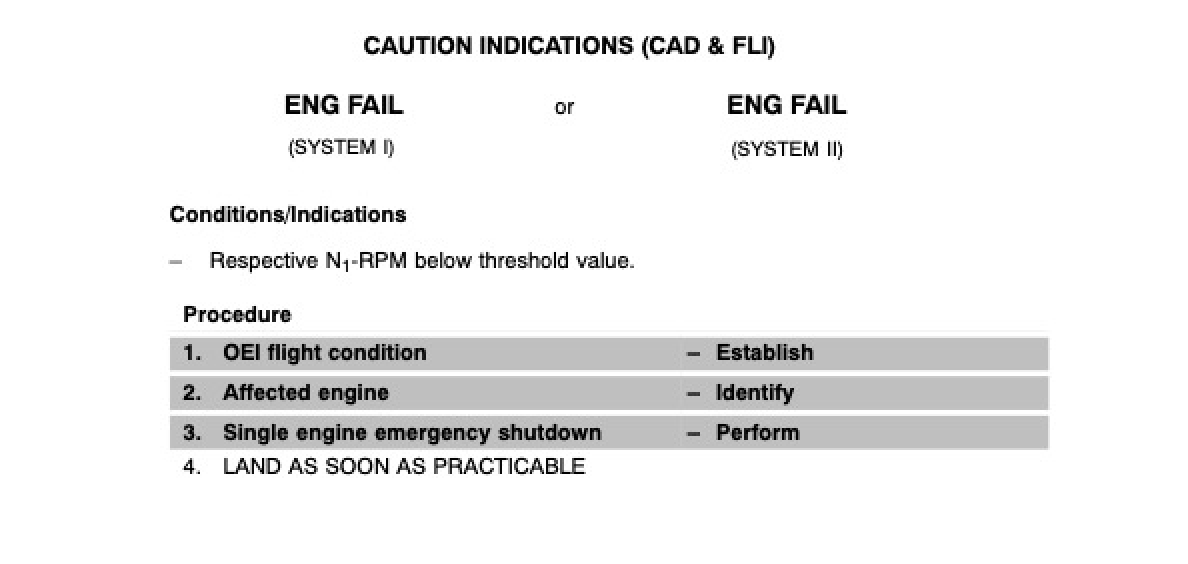

OEI Flight condition - Establish - means - a condition where you can operate effectively with the "normal" engine within OEI limits
Affected Engine - Identify - means - all the Captions which will be numerous in addition to instrumentation.
Single Engine Emergency Shutdown - Perform - means ENG MAIN sw - IDLE, Check indications (confirm), then OFF.
Fire in flight only has one additional item - EMER OFF switch - which closes the fuel supply valve. IF you have Engine Fire Extinguisher fitted it will automatically fire when FIRE is active, fuel valve is closed and N1 < 55% - there is no way to activate it manually.
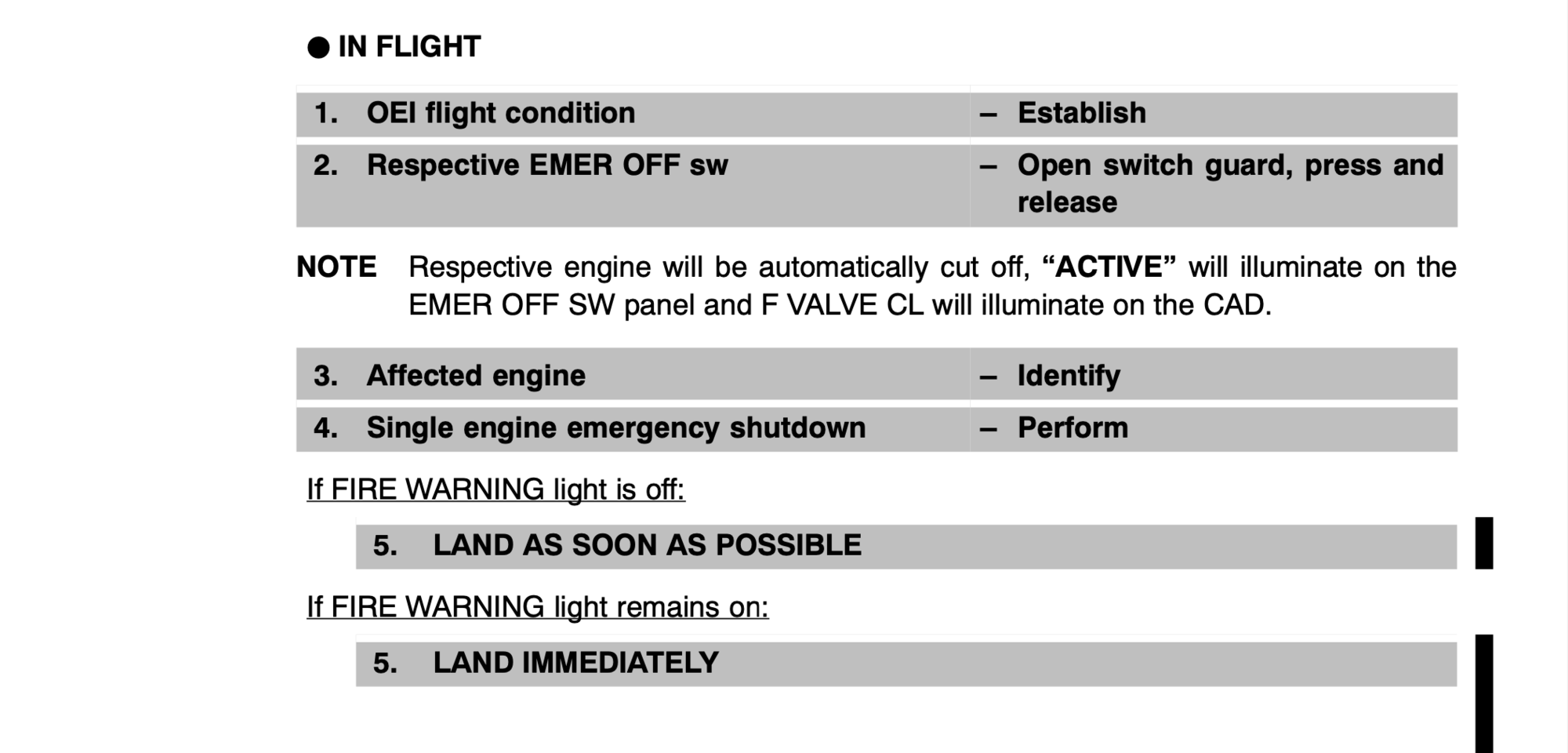
The extracts are from a CPDS type RFM which this particular aircraft may not have been but the items are the same.