


Helicopter pilots 'Not Easily Startled'

Thread Starter
Join Date: Sep 2006
Location: F8 and Be There
Posts: 156
Likes: 0
Received 0 Likes
on
0 Posts
Helicopter pilots 'Not Easily Startled'
Next time the glass cockpit guys with the crisp white shirts are taking the piss because you fly something that needs windscreen wipers, you might like to point them here:
Not all pilots are easily startled, it seems - Learmount
Not all pilots are easily startled, it seems - Learmount
A phenomenon now dubbed "the startle factor" is increasingly a subject of concern among aircraft accident analysts. It describes a seemingly growing tendency for pilots to react illogically to a surprise event.
Air France 447 was an example, as was the Colgan Air Dash 8 stalling event at Buffalo and the recent incident in which an Air Canada pilot who had just woken over-reacted to the presence of nearby traffic that was not a threat.
For lack of another explanation, the current assumption is that modern flight is more rarely punctuated by the unexpected than it used to be, so pilots are more easily startled.
North Sea oil support helicopter pilots seem to be made of sterner stuff.
Consider the May ditching of a Bond Offshore Helicopters EC225LP Super Puma.
It was the right decision, and completely successful, despite the fact that the crew were suddenly bombarded with a plethora of strident warnings and alerts while en route from Aberdeen to the Maersk Resilient platform.
This, according to a UK Air Accident Investigation Branch special bulletin, is what the crew faced "almost simultaneously" while while in the cruise at 3,000ft:
WARN red light and aural gong
MGB.P caption illuminates on the central warning panel (pressure drop in main gear box oil distribution manifold)
CAUT amber light
XMSN caption illuminates on the CWP (transmission)
M.P and S/B.P illuminates on the vehicle monitoring system (oil pressure drop in both main and standby lubrication system)
SHOT illuminated on the MGB control panel (alert to operate the emergency lubrication system)
Zero indication on the MGB oil pressure gauge
CHIP illuminates on the VHM
MGB oil temperature starts to increase
Startled? I would be.
Over to the AAIB's account:
"The commander assumed control of the helicopter, reduced speed toward 80kt IAS, turned back toward the coast and initiated a descent. The crew activated the emergency lubrication system."
But their problems are not over. As the aircraft settles into the descent...
MGB EMLUBE illuminates on the CWP (the emergency MGB lubrication system had failed, for which the drill is to land immediately)
Considering that all 16 people on board a Bond AS332L2 Super Puma died in April 2009 when the MGB failed without warning and the rotor head separated, the crew could have been forgiven for having fairly high adrenaline levels.
AAIB: "The commander briefed the passengers and carried out a controlled ditching."
Easy.
Air France 447 was an example, as was the Colgan Air Dash 8 stalling event at Buffalo and the recent incident in which an Air Canada pilot who had just woken over-reacted to the presence of nearby traffic that was not a threat.
For lack of another explanation, the current assumption is that modern flight is more rarely punctuated by the unexpected than it used to be, so pilots are more easily startled.
North Sea oil support helicopter pilots seem to be made of sterner stuff.
Consider the May ditching of a Bond Offshore Helicopters EC225LP Super Puma.
It was the right decision, and completely successful, despite the fact that the crew were suddenly bombarded with a plethora of strident warnings and alerts while en route from Aberdeen to the Maersk Resilient platform.
This, according to a UK Air Accident Investigation Branch special bulletin, is what the crew faced "almost simultaneously" while while in the cruise at 3,000ft:
WARN red light and aural gong
MGB.P caption illuminates on the central warning panel (pressure drop in main gear box oil distribution manifold)
CAUT amber light
XMSN caption illuminates on the CWP (transmission)
M.P and S/B.P illuminates on the vehicle monitoring system (oil pressure drop in both main and standby lubrication system)
SHOT illuminated on the MGB control panel (alert to operate the emergency lubrication system)
Zero indication on the MGB oil pressure gauge
CHIP illuminates on the VHM
MGB oil temperature starts to increase
Startled? I would be.
Over to the AAIB's account:
"The commander assumed control of the helicopter, reduced speed toward 80kt IAS, turned back toward the coast and initiated a descent. The crew activated the emergency lubrication system."
But their problems are not over. As the aircraft settles into the descent...
MGB EMLUBE illuminates on the CWP (the emergency MGB lubrication system had failed, for which the drill is to land immediately)
Considering that all 16 people on board a Bond AS332L2 Super Puma died in April 2009 when the MGB failed without warning and the rotor head separated, the crew could have been forgiven for having fairly high adrenaline levels.
AAIB: "The commander briefed the passengers and carried out a controlled ditching."
Easy.


Join Date: Dec 1999
Location: UK
Posts: 2,584
Likes: 0
Received 0 Likes
on
0 Posts
Oh Mr Learmount...
Perhaps there is a world of difference between an aeroplane that is apparently refusing to comply with the laws of aerodynamics and with instruments indicating all sorts of strange and apparently contradictory things and a clear-cut failure corroborated six different ways in an aircraft that is known to be prone to the problem.
It must have been a slow news day in Mr Learmount's office.
Perhaps there is a world of difference between an aeroplane that is apparently refusing to comply with the laws of aerodynamics and with instruments indicating all sorts of strange and apparently contradictory things and a clear-cut failure corroborated six different ways in an aircraft that is known to be prone to the problem.
It must have been a slow news day in Mr Learmount's office.

Ask yourself this question......If the Air France Pilots had maintained cruise throttle settings....maintained cruise pitch angle.....maintained heading........what would have been the outcome?
Would not RadAlt and GPS have been other sources of height data? The GPS would have been giving them Ground Speed....which if they had been monitoring that they would have had a rough idea of airspeed. Remember they were over the ocean nearly in the middle of the Atlantic....heck for that matter....would not OAT have been a rough guide to Altitude?
What was the weather ahead of them......good enough for a Visual Descent and Landing?
Rule one in all emergencies is "THINK!"
Would not RadAlt and GPS have been other sources of height data? The GPS would have been giving them Ground Speed....which if they had been monitoring that they would have had a rough idea of airspeed. Remember they were over the ocean nearly in the middle of the Atlantic....heck for that matter....would not OAT have been a rough guide to Altitude?
What was the weather ahead of them......good enough for a Visual Descent and Landing?
Rule one in all emergencies is "THINK!"
Last edited by SASless; 16th Jun 2012 at 14:18.
Guest
Posts: n/a
I think it's a little invidious to suggest that there's a difference between fixed wing and helicopter pilots abilities, and I agree it must have been a slow day in Mr Learmount's office. For every AF447, there's a US1549, and for every REDW there's.... well you take your pick of the 'Doh!' moments recorded by the AAIB for helicopters.
Last edited by puntosaurus; 16th Jun 2012 at 17:00.
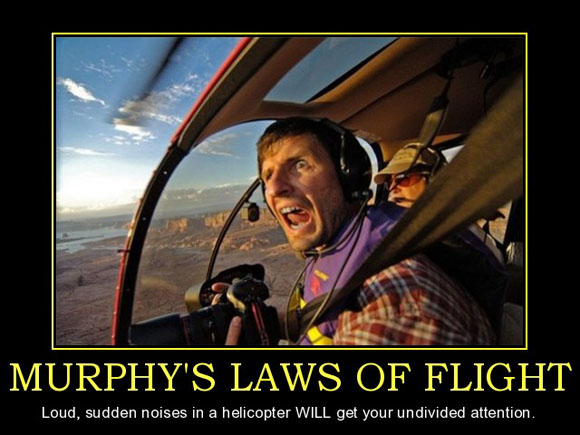
We don't startle easily.....yeah right! Slam a door near a helicopter pilot and watch him jump out of his shoes!
Ask yourself this question......If the Air France Pilots had maintained cruise throttle settings....maintained cruise pitch angle.....maintained heading........what would have been the outcome?
Avoid imitations
Join Date: Nov 2000
Location: Wandering the FIR and cyberspace often at highly unsociable times
Posts: 14,573
Received 419 Likes
on
221 Posts
...and those of us who've done SAR and/or air ambulance can be startled from sweet dreams to wide awake in a nanosecond if the ringtone is right...

SASless
In attempt to condense several hundred pages of threads elsewhere - We know the probable outcome if they had done that, but some are claiming that holding current pitch attitude was not the procedure being taught at the time of the accident ( I don't know why not, and we all know pulling to 15 degree pitch at high level wasn't taught either).
Rad Alt - not at high level, e.g. on the 747/777 Rad Alt only live below 2500 feet.
GPS altitude - AFAIK not usually available/displayed on most Widebody Flight decks.
Rough, yes, but they were close to their ceiling and in/near the ITCZ, so a rough idea may not have been any use at all, especially if windspeed/direction was changing rapidly.
Perhaps, perhaps not, but fundamentally altitude wasn't their problem until very late in the game, whereas Angle of Attack very much was ...and the AF447 crew had no direct display of that information.
IMHO a combination of startle factor/ poor training/ poor procedures may be an explanation for the initial pitch excursion on AF447 but IMHO (again) once that aircraft had zoomed above it's ceiling and entered the stall, with added complication that the stab had automatically run LE down, I'm not sure many pilots, startled or not, white shirts or not, fixed wing or rotary, would have recovered the situation.
(BTW for the OP - even the likes of 747s and 777s have windscreen wipers )
)
If the Air France Pilots had maintained cruise throttle settings....maintained cruise pitch angle.....maintained heading........what would have been the outcome
Would not RadAlt and GPS have been other sources of height data?
GPS altitude - AFAIK not usually available/displayed on most Widebody Flight decks.
The GPS would have been giving them Ground Speed....which if they had been monitoring that they would have had a rough idea of airspeed.
......would not OAT have been a rough guide to Altitude?
IMHO a combination of startle factor/ poor training/ poor procedures may be an explanation for the initial pitch excursion on AF447 but IMHO (again) once that aircraft had zoomed above it's ceiling and entered the stall, with added complication that the stab had automatically run LE down, I'm not sure many pilots, startled or not, white shirts or not, fixed wing or rotary, would have recovered the situation.
(BTW for the OP - even the likes of 747s and 777s have windscreen wipers
)
Last edited by wiggy; 16th Jun 2012 at 22:31.

Join Date: May 2012
Location: Lancashire
Age: 31
Posts: 8
Likes: 0
Received 0 Likes
on
0 Posts
With regards to the main rotor head stepperation on the bond super puma in the unfortunate April 2009 incident. Is rotor head sepperation something that can occur on any RW aircraft, I fly fixed wing however have never herd of this for example on a Jet b206.
Cheers !
B
Cheers !
B
There was a time when the Jet Box was very new....the entire MGB and Rotor system would depart the aircraft. It had to do with transmission mounts failing.